Have you heard the news? 2016 is back. Everyone is posting their dog-eared selfies, but at kentcore, we have some real work to do. We’ve sifted through our playlists, top charts, and personal memories to find out: was music really good then? Read on to see which of the hits of 2016 we’re bringing into 2026, and which we’re leaving behind.
Carson Bauer
In 2016, I was 11 years old. I missed out on a number of the larger cultural movements of the era due to being in middle school. I wasn’t allowed to have Vine or Instagram, but you know what I did have? YouTube and a Warrior Cats roleplay account. And honestly, that’s where it was really at. 2016 was the first “real” year in my memory where I felt like a part of a culture, and also the first year I started paying attention to music and really developing my own taste. Before the days of Spotify (or at least, before I found it), most of my music discovery was done through full albums posted on YouTube, and the first recommended video would be my next listen. This was a great introduction to a lot of amazing music: I was a very early adopter of The Microphones, Kimya Dawson, Teen Suicide, Car Seat Headrest… and then none of it stuck and I became a Twenty One Pilots superfan. While most of these albums were actually released in 2015, they experienced their heyday in 2016 enough for me to count it. As much as I want to cringe when typing these reviews, this era was really foundational for my development as a music listener. And, as we’ll find out: maybe it wasn’t all *that* bad!
dodie
Intertwined
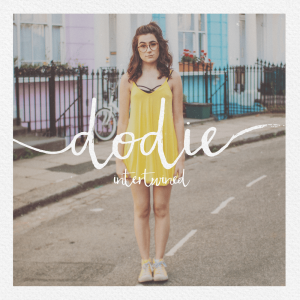 I have no perception of how pivotal to the culture dodie was in 2016, but she was pivotal to me. I discovered her music in late 2015 with her cover of Twenty One Pilot’s “Goner”, and I think this is when a majority of her fans found her as well. Her first EP, Intertwined, was released in 2016, back when a musician being discovered by the internet was still something of a novelty. And I can proudly say that I was there before it happened: I won the ticket lottery to see her at the Grog Shop with Tessa Violet, Rusty Clanton and Jon Cozart. And yes, I made my own flower crown. I had almost entirely forgotten about this album, viewing dodie as more of a vlog star until I started working on this album and unearthed my preteen psyche.
“Intertwined”, the album’s namesake, is a hauntingly beautiful depiction of a toxic relationship. I remember listening as a child and trying very hard to relate the lyrics to my more positive view of romance and safety, holding “Oh you / And I / Safe from the world / Though the world will try” dear to me and my romantic fantasies and conveniently ignoring all the rest. I didn’t, couldn’t, understand the rest of the song and its implications. “You create a rarity of my genuine smiles” at the time to me meant something like “I love you so much that I can’t appreciate other people”. Which, even if that was the real meaning, is still not worth idolizing. But it is a beautiful depiction of a failing relationship, especially due to mental health: “Can you drink all my thoughts / Cause I can’t stand them” and “I’ve pinned each and every hope on you / I hope you don’t bleed with me” are both achingly poignant to me as an adult. dodie masterfully creates this sonic environment of safety and wholesomeness while incorporating lyrics that subtly suggest that something else may be amiss. Paralleling the opening lines of “Skin / Heat” with the delivery of the second verse’s “Numb / Fine” the song beautifully builds to a climax that feels both passionately in love and deeply, deeply afraid. It was so interesting revisiting this song I loved so much as a child now as an adult with the life experience able to really understand it. This is one of those songs you just need to turn the volume up on and let it wash over you.
“Intertwined” is immediately followed by “I Have A Hole in my Tooth (And My Dentist is Shut)”, which… loses every inch of momentum. I remember its’ release on YouTube, and checking now, it has over 900,000 views. I can see how it blew up, and she decided to put it on the album for that reason. But the video was released in March, and the EP released in November. Did she write the song with the intention of releasing it on the EP? Why? Why was it needed? It is such a switchup from “Intertwined”, and picks up this “My First Piano”-type electronic beat, but retains the breathy whisper-singing from the title track. It’s catchy – I find myself humming it when I have a toothache, even ten years later – but it is the perfect song for a YouTube video and not for a professionally-released EP. It’s that brand of “quirky” that was huge at the time, but now comes off as grating. In 2016 it was authentic, and now it comes off as performative and cringe.
The rest of the EP carries on as usual. I don’t feel strongly about any of the songs; they aren’t bad, but I don’t think I will have the desire to come back to them anytime soon. dodie’s time as a vlogger has perhaps given me too personal a view of her: rather than hearing “When” through the lens of my own experiences, I find myself reflecting on her worries of growing up too fast, and wondering if she has overcome those fears. It would be slightly parasocial if I still kept up with her happenings, but in a strange way, it feels like listening to an album from an old friend. “Absolutely Smitten” is cute and upbeat, and I appreciate the production (which I disliked at the time, preferring the DIY-sound), and “Sick of Losing Soulmates” again suffers from the parasociality, of wanting to express to the girl who wrote the album that ten years have passed and that she’s probably okay now. It’s interesting that dodie would have been my age when Intertwined was released, but I still feel like I have aged out of many of the concepts expressed, perhaps a symptom of these songs being written throughout her YouTube career that started at 16 rather than all being written especially for the EP. I think it’s the stripped back-ness of her lyricism, there is no using metaphor to hide in the pages, so if you don’t relate, you’re done for.
Clearly, dodie eventually took off (does anyone remember dodie yellow?). She’s since released three full-length albums, been on the Seth Myers show, and collaborated with Jeff Goldbloom, for some reason. I’ve grown out of this kind of indie acoustic sound, but I do think she would be enjoyed by fans of Laufey. While it’s not quite for me anymore, there’s a lot to love on this release, and I would love to hear someone’s reaction who did not grow up with this music. I think it’s less of a sign of the times and more a sign of growing up that this album does not land as much as it used to, so dodie gets to stay.
Halsey
Badlands
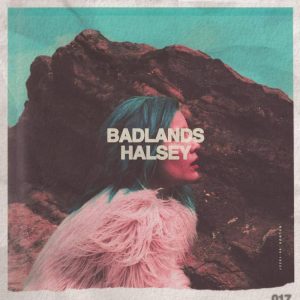 This review is a little different from the others. A conversation with our producer Charley Fox about how poorly this album aged is what sparked my idea in writing this entire article. For that reason, maybe my opinion is a little skewed: after hearing Charley’s thoughts, I went into this album expecting it to suck ass. And it sucked ass! So take my words with a grain of salt, but also understand that I am always correct and all of my opinions are perfect.
I honestly may have never listened to Badlands in its entirety in its heyday. From using YouTube as a music player before that was a thing, I would search one song and then just click the next Halsey song I saw in the recommended. I’ve certainly heard all of them many many times, but I don’t know if I’ve heard them in their proper order before. But I don’t really think it benefitted the experience.
Badlands is clearly trying to be a concept album of some kind. I’ve read in so many articles that I can’t find the original quote that the location of “Badlands” is a metaphor for Halsey’s state of mind at the time of writing the album. And clearly the Land must have been pretty Bad for this to be the truest representation of how she was feeling. Badlands substitutes any kind of worldbuilding for a constant onslaught of sensory-evoking lyrics. The amount of times that hands, lips, taste, touch are mentioned on this album are insurmountable. There are two songs talking about making out in a car and every song is touched with vague Christian imagery used only for the aesthetic. The lyricism is vaguely rooted in personal experience, but does not push any of the concepts far enough to transform into a narrative story suitable for a concept album, rather than just a vague combination of concepts.
“Hold Me Down”’s pre-chorus of “I sold my soul to a three-piece / and he told me I was holy” evoking imagery of music executives but also of devotion and worship, romantically. Then followed up by “He’s got me down on both knees / But it’s the devil that’s tryna… [hold me down]” which brings to mind a strange kind of sensuality. This can be taken as a commentary on how male-dominated the music industry is, rather than being sexual this is just a display of dominance. But again with “Castle”, the first verse’s “Tired of all these cameras flashing, sick of being poised / Now my neck is open wide, begging for a fist around it”, she is both empowered and vulnerable. “Castle” is once again about misogyny and the music industry. Now that she’s out in the open as an artist, someone could throttle her entirely. And maybe it is misogyny that is making me interpret these lyrics sexually, but every other fucking song on this album is about the taste of someone’s skin or the feeling of their breath, so when the word “neck” is used I start getting scared.
My favorite thing in this entire album is that “New Americana” is supposed to be a song about the beauty of diversity in America. Apparently, “We are the new Americana / High on legal marijuana / Raised on Biggie and Nirvana / We are the new Americana” is supposed to point to the fact that America is a diverse nation with a diverse set of opinions. What? How? When you write five songs on an album about how awesome it is to smoke weed and drive around, how the fuck is the sixth one supposed to be some beautiful statement on diversity?
But still, I would be a liar if I said it wasn’t a banger. It’s camp! The over-dramaticism of the lyrics fed really well into the AMVs of the day, so I can see how it blew up. It’s fun to sing along and pretend you’re some villain, and that era of electropop is so of-its-time it’s strange to hear now.
Really, Badlands would fit in well today with the landscape of “BPD Girlfriend” being a tagline to add on dating apps. But even crazy girls deserve better music… let’s leave Badlands behind.
Melanie Martinez
Pity Party
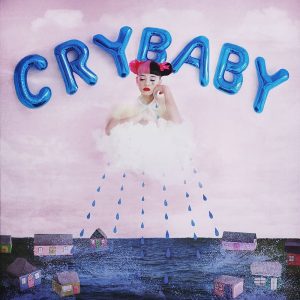 This one is a flop. I’m sorry. I have to speak my truth and say this outright.
This phase was a little more short-lived to me. I had my time, but dropped her years before K-12 was released. I had my Hot Topic Crybaby shirt of course, but I was not into it enough to know about that perfume she sold that got so popular it started selling for $1,000. But outside of the scary capitalism, releasing a perfume alongside your debut album is kind of cunty. Like, the confidence of knowing the album would succeed? Crazy.
This album is yet another example of something that’s perfect for baby’s first experience with mental illness, but as a reasonably mentally ill adult, all of the metaphors fall flat. When you’re eleven and hear a lyric about drinking alcohol out of a baby bottle? That’s like, soooo deep… and just as dark and twisted as YOUR life is. But ten years later I struggle to see the concept album’s use of childlike imagery as an enhancement in any way. Something about the enunciation Melanie sings with: it feels smug; like she is rubbing it in your face how “deep” the lyrics really are despite the facade.
Bluntly, “Tag, You’re It” is kind of disgusting. Martinez writes about sexual assault through a child’s eyes, without any of the nuance required for the topic. It is so clear that this is only used to add to the dark and twisted narrative of the story, rather than any commentary on the experience or the effects of it. I don’t think this is a wrong thing to talk about, at all – obviously music is cathartic, and art that makes you uncomfortable is not necessarily “problematic”. But writing this song, and then following it up with “Milk and Cookies”, a song that’s pre-chorus is “Hush, little baby, drink your spoiled milk / I’m fucking crazy, need my prescription filled / Do you like my cookies? They’re made just for you / A little bit of sugar, and lots of poison too” shows that Martinez is not the right person for the job, in any capacity, at all.
Melanie continues to play fast and loose with themes of mental illness throughout the album, but the worst offender is, of course, “Mad Hatter”. Alice in Wonderland’s imagery has never been able to escape from the grips of people who say “haha, are you like, on drugs?” whenever you say something funny. Because it’s all a drug metaphor, obviously. And the Mad Hatter is soooo crazy, just like Melanie! “I’m peeling the skin off my face / ‘Cause I really hate being safe / The normals, they make me afraid / The crazies, they make me feel sane” is really gonna scare off those “normal” people!
Not to mention the dogwater production on this entire album. Crybaby released well into the era of the electropop/EDM phase, and oh boy, is it obvious. “Soap” was a game changer for tweens with mild anxiety disorders, the themes of saying the wrong things and driving people away? So relatable! The beat builds over a refrain of “God I wish I never spoke / Guess I gotta wash my mouth out with soap” and it does a pretty good job of winning you over. And then the beat drops, and it’s these gross-sounding bubble sound effects layered on top of each other. I almost laughed out loud when I heard it. Even when I was younger, I remember thinking it was strange. I see the vision, I really do. But something about it once again just feels smug. I never did understand why all of these pop girls were going with these “harder” beats at the time. Melanie commits the same crime as Halsey, of just trying too damn hard.
Overall, please leave Crybaby behind. I have not listened to K-12 or Portals, and I do not plan on it because I am an adult with a job. I do wonder looking back how Crybaby got included in the “yeemo” moment of the time. I definitely found the album through a recommended video next to My Chemical Romance or something. And I can definitely see how the album was impactful to preteens, including myself – because it WAS baby’s first experience with mental illness, and as trite as the metaphors were, it was a lot of our first exposure to media that was reflective of our experiences, and that’s important too. But I was a pretty sheltered kid, so I don’t know what the hell I thought was so relatable. My verdict is to leave Crybaby in 2016, just like the blue eyebrows, space buns, and split dye that she was wearing on the cover of that album. Wow, what a time.
Twenty One Pilots
Blurryface
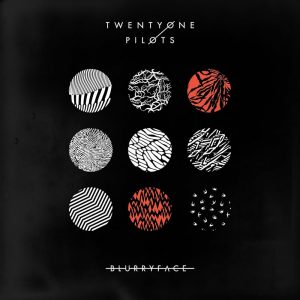 I really do hate to say it, but I went to war for Blurryface. Twenty One Pilots was the first band that I felt a real connection to: sure I loved Katy Perry as a child, but as a preteen, this was so much more real. As much as I hate it, my time as a Twenty One Pilots fan started me with the passion that carried me to kentcore today.
I went into this listen trying to be just as aggressive as I was with the other reviews. But I couldn’t bring myself to do it. Maybe it is misogynistic… what I criticized Melanie Martinez and Halsey for was their predatory language about mental illness and over-dramaticized lyricism. And that’s certainly a massive problem here too: it’s kind of concerning how much Tyler Joseph uses his songs to convince teenaged listeners they’re part of a “secret club”, when you think about it. But something stopped me from unleashing my full negativity. Even now I can’t stop but feel a certain softness for the album. But I do really think that the production is better on Blurryface then the other albums, even though it suffers the same fate as trying too hard.
Twenty One Pilots was the start of my eternal curse of discovering artists just mere months or weeks before they truly blow up. “Stressed Out” was most people’s first introduction to the band (and probably mine too), but it is arguably the worst on the album. Or maybe that’s because I’ve heard it so many times. I guess it’s a win that a song sung by a man about having anxiety could be played on the radio… back when “woke” was good. “Ride” was also released as a single, and it’s far easier listening in my opinion.
I swear I did hear “Fairly Local” on the radio a couple of times. Which is funny, because it’s probably the worst example of the album’s individuality complex, with the lyrics “Yo, this song will never be on the radio / even if my clique were to pick and the people were to vote / it’s the few, the proud, and the emotional”. I think that’s the crux of the reason that this album blew up so much: not only did the music speak to teenagers in its themes, but it came alongside a manufactured identity as an “outsider” that came with a built-in community. And there’s nothing wrong with that, teenagers will be teenagers. The problem is that I am an adult now and I’m listening to this album.
Blurryface’s biggest crime is still just being corny. There’s a pretty clean split between dramatic and sappy on this album, and songs can be sorted easily into either category. And I do still think the dramatics fared better: a song about being scared all the time was a lot more relatable at eleven years old than “Tear in my Heart”, a song about loving your wife so much that you drive carefully to not wake her up in the car. It was the soundtrack to a life I was not at all living. But even though the scarier-sounding songs were better, they are still just… corny. What kind of mental illness did Tyler Joseph have to be writing bars like “I wasn’t raised in the hood / but I know a thing or two about pain and darkness”, because I don’t think there is any disease on Earth to absolve him from deserving criminal charges for that line. But we’ve known that already. It’s also very interesting that I have genuinely never heard another band that sounds like Twenty One Pilots, but at the same time they manage to sound so derivative. Maybe in their quest to develop a unique sound they got kind of insular.
I forget that Twenty One Pilots is still popping. I’ve heard Scaled and Icy (sucked), Trench (forgettable), Breach (fine) and somehow skipped Clancy entirely. Three of those albums came out within the past five years, which is kind of a fast pace. The albums are fine, and I do look forward to hearing “City Walls” when it comes on Summit FM, but in the same sense that I enjoy hearing Sabrina Carpenter: enjoyable, but I have no desire to stream it on Spotify. And I think some of the hate for this album’s corniness comes from cringing at my own history with the album, rather than a critique of the music itself. And I do really hate them for coming up with the phrase “Power to the local dreamer” because I love that saying and want that on a tshirt but I can’t do that knowing where it comes from. Overall, this album is lame, but I’m lame too. I won’t be listening again for a long time, but out of the other albums reviewed, I do think it’s the only one that held up, even if only for nostalgia’s sake.
Jaiden Miller
I honestly don’t remember much about 2016. I only recall various parts about it, but to be fair, I was nine (essentially an infant). One of the few things I remembered about that time was the music. Unless you lived under a complete and total rock, 2016’s music had a very distinct sound
compared to everything else in the decade. No matter what genre you listened to, 2016 was a monumental year. I honestly think that it was one of the — if not the last — years for monoculture, meaning a collective culture for popular media.. One could talk about the many different things that happened during that year, but one of the biggest, yet overlooked aspects, is the EDM music. EDM, which has been an established genre for at least forty years, had become more and more popular during the 2010s. But 2016 was the catalyst event for the genre. Think about it—you couldn’t listen to the radio without hearing Zedd, Avicii, Alan Walker, Major Lazor, Calvin Harris, Galantis, Marshmello, etc. It introduced singers like Anne-Marie, Hailee Steinfeld, and Jess Glynne to a mainstream audience. Even Rihanna and Justin Bieber, major pre-established artists, had their careers skyrocket further. It was a hot new sound, and it seemed like the genre had a bright future.
So, where is the genre today? Despite the widespread nostalgia people have for both the year and the music, we don’t see EDM in the mainstream anymore. If anything, we see a lot more musicians opting to use instruments, or at the very least, emulate instrumental sound. This isn’t to say that musicians fully stopped using non-electronic elements in their music. However, the mark that EDM had on the couple of years after 2016, versus a decade later, is incredibly noticeable. Along with the genre’s lack of presence, a lot of the musicians who once made it popular don’t have the fame they used to have. Arguably, the biggest musicians of this time, the Chainsmokers and Marshmello, have faded into obscurity.
One could go down a rabbit hole into what happened to the genre, but retrospectively, I don’t know how well it aged. On one hand, the music is pretty good, if not great. I’m not going to write this article and pretend I didn’t have at least six different dance breaks. It makes sense why we all cling to not just the year, but the genre. It seemed like we could only go up musically from here, because each song, no matter how happy or sad, made us want more. However, at this current moment in music, if you were to make a song similar to what was popular in 2016, I doubt it would be as popular as it would have been ten years prior. The music was new for the time, but if it were made now, it would feel like a relic from the past. It was new and fresh then, but now it would seem repetitive and boring.
The last thing I will add is a perplexing thought I’ve had while writing this article. I don’t know if it’s a recency or nostalgia bias, but I don’t think we’re ready to make hits that reflect only a decade ago. Nostalgia for 2016, and the established songs from that time are popular because they’re familiar to us. They are recognizable songs with recognizable hooks that make us feel safe. But, beyond that, we aren’t ready for people to try to emulate it due to its different sound. New music that sounds like it came from the 80s, ‘90s, or even the 2000s mostly sounds good today because we yearn for the far past, not the recent present. After all is said and done, 2016 had a pretty darn good music scene. Now, if you’ll excuse me, I’m going to listen to “Starving” by Zedd.